
Tuesday, March 9, 2010

(Vanilla-Maple) Almond Milk, and a smoothie


As much as Cafe Gratitude (or 'Cafe Attitude,' as Jay has aptly dubbed it) annoys me with their too-cool-for-school employees, constantly running out of what you wish to order, and irritating 'questions of the day,' I occasionally seat myself at their bar and order one of the many delectable, raw, vegan shakes, and perhaps a grain bowl (which is 'dead' - ha!), from off of the menu. Sitting at the bar has another perk: the tender will often pour extra bits of smoothie into a small cup and slide it your way. What other bar does that?


I sometimes used to buy outrageously expensive bottles of almond milk to bring home and enjoy for breakfast with granola (also of the 'dead' variety), until I decided to get myself a nut milk bag and give it a go for myself.


Freshly made almond milk tastes nothing like the chalky stuff you find on the shelf at the store. It is smooth, mild, and sweet, with an ethereally delicate texture. I used to think only raw foodist hippy freaks made almond milk, but recently found that it is traditionally made in India, with the addition of cardamom and rose water. Once you taste home made almond milk, you will never want to drink another milk substitute, or possibly the real thing, ever again. It does take a bit of planning ahead, as the almonds need to soak for 8-12 hours (after soaking, they can be stored in the fridge for a few days if you don't get to them), and elbow grease; squeezing the dickens out of the almond pulp is harder than you may anticipate. But the results are well worth it.


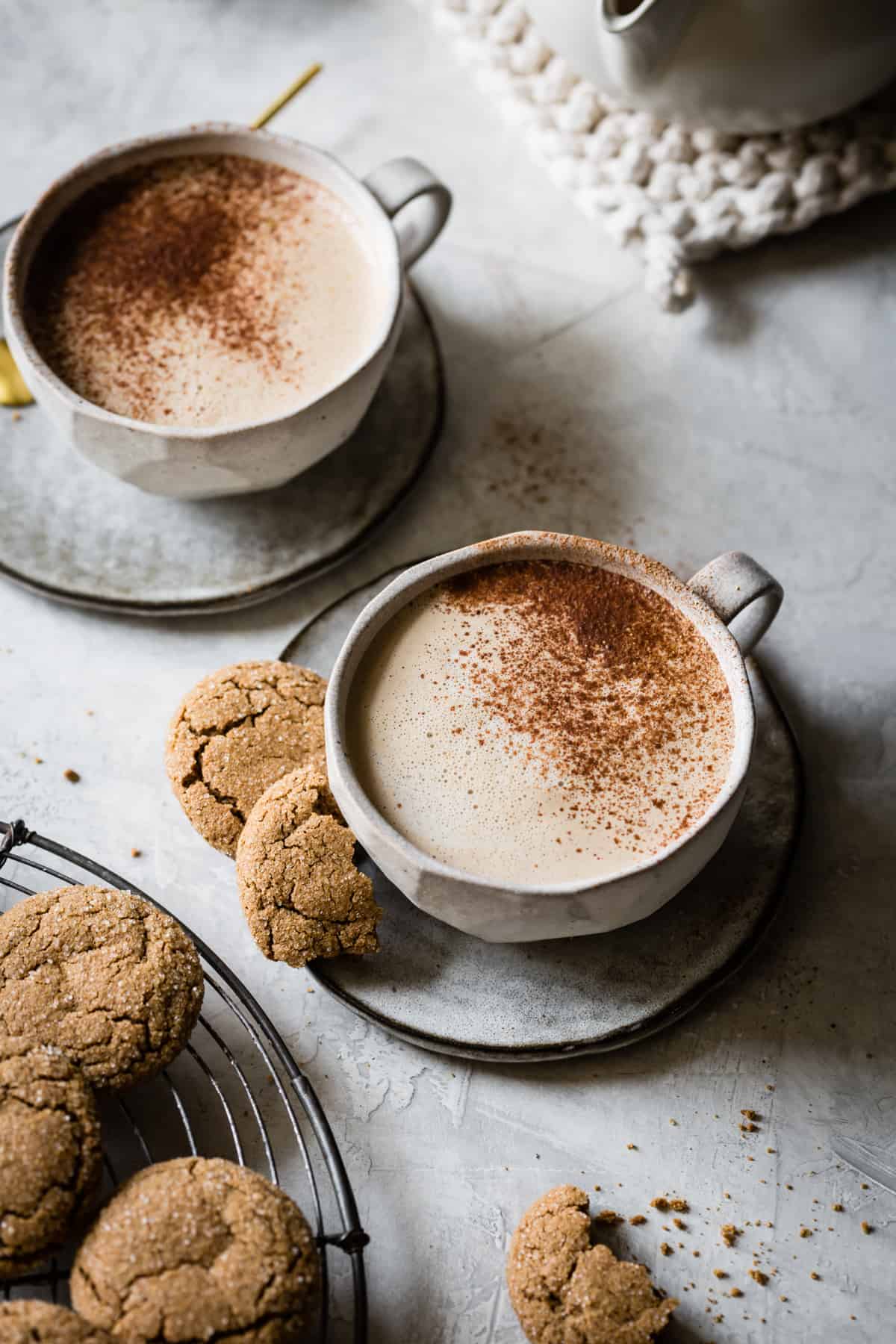
You can sweeten your almond milk with anything you like, add vanilla or other flavorings. And don't throw away the pulp - it can be dried out in a low oven, whizzed in a coffee grinder, and used in place of some flour in muffins, cakes or cookies. Almond milk is delicious in tea or coffee, warmed with honey and a bit of grated nutmeg, or blended into a smoothie of your liking. Bananas, yogurt and frozen huckleberries went into mine this morning; raspberries and peaches would also be heavenly.


Making your almond milk at home has another perk: no one asks you what you are 'grateful for today,' looking at you deeply and expectantly.

And you don't have to tell them, 'I'm grateful I can make my own almond milk, thank you very much.'


Vanilla-Maple Almond Milk

Makes 3 1/2 cups

1 1/2 cups whole almonds
3 cups water
pinch salt
2 tablespoons maple syrup or sweetener of your choice (optional)
1/4 vanilla bean, chopped up, or a splash of vanilla extract (optional)

Place the almonds in a bowl or jar, add enough water to cover them by a couple inches, and let soak for 8-12 hours. Drain off the water, rinse the almonds and drain again.

Place the almonds in a blender with about a cup of the water, the salt, sweetener and vanilla bean. Begin blending on low. Increase the speed gradually, adding just enough water for the mixture to turn over, until the blender is on high and you have added all the water. Blend on high for about two minutes, until the mixture is as smooth as possible.

Place a nut milk bag in a large bowl or measuring cup, and pour the mixture into it. (Alternatively, use several layers of cheesecloth lain in a sieve.) Twist the top closed, and squeeze the mixture as firmly as you can, pressing out as much of the milk as possible. This will take several minutes, and your hands and arms will probably feel worked. (Spread the remaining pulp out on a baking sheet and place in a low oven, or an off oven with a pilot light, until completely dried out, several hours or days. Whiz in a coffee grinder or food processor to break up any clumps. Use in place of some of the flour in muffin, cookie or cake recipes.)

Store the milk in a jar in the fridge for up to a week. The almond milk will separate; no problem, just shake it to recombine.

Banana-Berry Almond Milk Smoothie
Serves 1

1 large, ripe banana
1/3 cup frozen huckle (or other) berries
1/4 cup yogurt
1/2 cup almond milk

Place the bananas, berries, yogurt and half of the almond milk in a blender. Puree on low to combine, then increase to high, gradually adding the rest of the almond milk, until very smooth.

Sunday, February 21, 2010

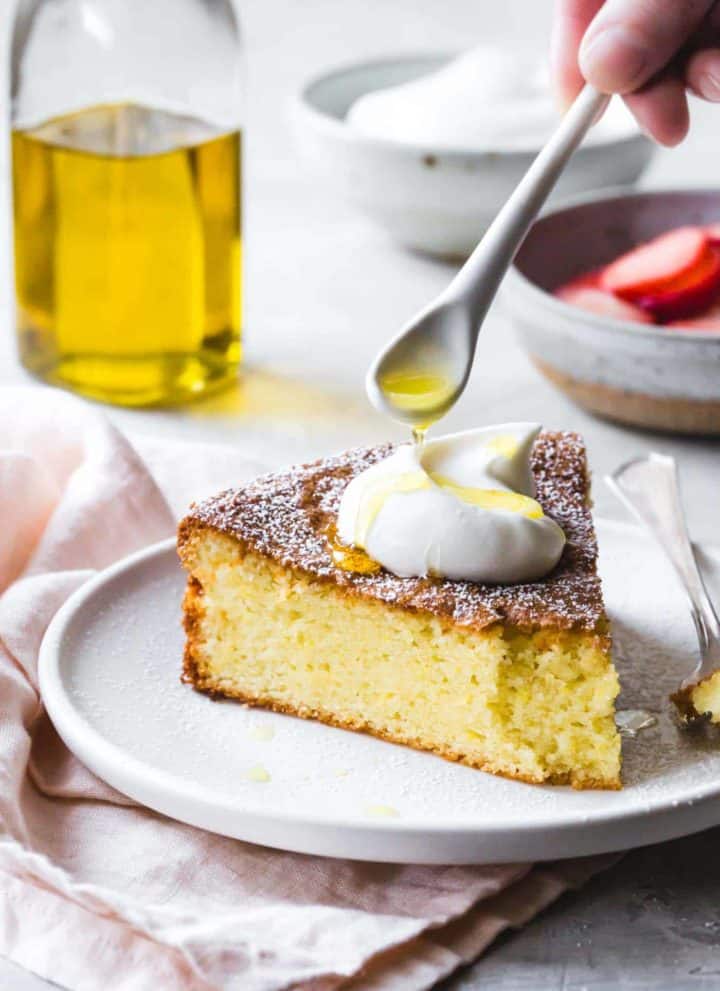
(Gluten Free!) Meyer Lemon Almond Cake


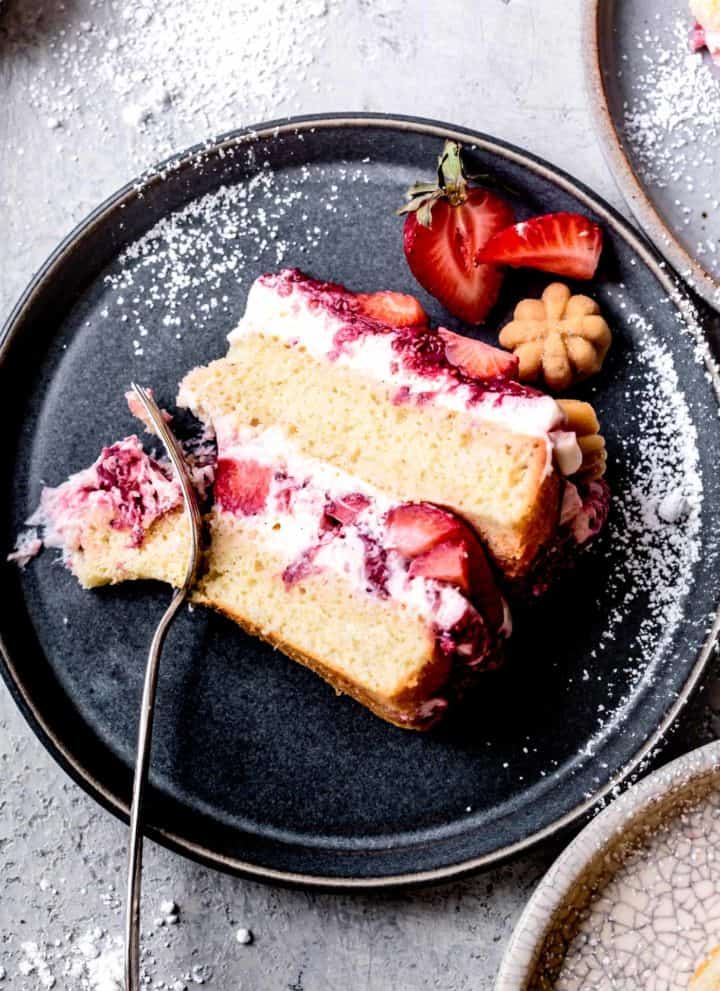
The other day, a very dear friend brought me six huge plump and fragrant meyer lemons from her grandmother's tree. I'd had my eye on a lemon-almond cake recipe that I'd clipped from Vegetarian Times magazine several years ago, as I love a nice, rustic tea-cake. I decided to make it gluten-free for my intolerant sister (ahem, that is, gluten-intolerant) and substituted the flour with extra ground almonds and some tapioca flour.

I was also ecstatic to find attractive, organic, California-grown strawberries that weren't outrageously overpriced the other day. I snapped them up, and served them, quartered and macerated with a bit of sugar, with said cake.


This dense, moist, not-too-sweet cake calls for a few different steps; toasting the almonds, grinding them with the tapioca flour, creaming the butter and sugar, whipping the whites to soft peaks, but they are all fairly simple to execute, and ensure delicious results. I may be a bad Jew, but I think this might even be kosher for Passover, no? (When is Passover, again?)


Strawberries! Spring can't be too far off, now...


(Gluten-Free) Meyer Lemon Almond Cake
Adapted from Vegetarian Times
Makes one 8" round cake, or 8-10 servings

I imagine you could use almond flour or meal for this cake with adequate results. Blanched flour would probably result in a lighter color, texture and flavor, which wouldn't necessarily be bad things.

1 1/2 cups whole almonds, lightly toasted and cooled (see note)
4 ounces (1/2 cup, 1 stick) unsalted butter, at room temperature
3/4 cup light brown sugar
zest of two medium meyer lemons
3 egg yolks
1/4 cup tapioca flour
1 teaspoon baking powder
1/2 teaspoon salt
1/4 cup meyer lemon juice
1 teaspoon vanilla extract
4 egg whites, at room temperature
1/2 teaspoon cream of tartar

For serving (optional):
powdered sugar, for dusting the cooled cake
lightly sweetened whipped cream
1-2 pints strawberries, hulled, quartered and tossed with a bit of sugar

Position a rack in the center of the oven and preheat to 350º. Butter an 8" round cake pan, and line the bottom with a round of parchment paper.

In the bowl of a stand mixer fitted with the paddle attachment, cream together the butter, sugar and zest until light and fluffy, 5 minutes on medium, scraping down the sides of the bowl occasionally. Add the yolks one at a time, mixing to combine.

Meanwhile, in a food processor or coffee grinder, grind the almonds with the tapioca as finely as possible without turning them into almond butter. Add the baking powder and salt to combine.

On low, stir the almond mixture into the butter mixture. Gradually add the lemon juice and vanilla extract. Scrape down the paddle and sides of the bowl.

In a clean, large bowl, whip the egg whites and cream of tartar until soft peaks form. With a large rubber spatula, stir a third of the egg whites into the batter, then fold in the rest just to combine.

Pour the batter into the prepared pan. Bake until the top springs back when pressed with a finger, about 45 minutes. Let cool ten minutes. Invert a plate over the top of the cake, and, using oven mitts, flip the whole thing over. Remove the cake pan and the paper, and let the cake cool completely, about 1 hour, before serving.

Sunday, February 14, 2010

(Vegan!) Chocolate Coconut Milk Tapioca Pudding


I have been thinking about vegan chocolate tapioca pudding for the past 5 years. This usually occurs in the bathroom. Before you jump to any disturbing conclusions, please let me explain.


Jay keeps q-tips in a plastic half-pint container which fits handily in the space under the medicine cabinet. This container happens to have held, many years ago, before my living with Jay was even a twinkle in either of our eyes, vegan chocolate tapioca pudding from the Staff of Life in Santa Cruz. I know this because of the faded, yellowing label on the lid of the container, which taunts me daily.


Sadly, though I often wish for the contrary, the contents of said container never vary: always I am greeted, post shower, with convenient and sanitary, though inedible, q-tips, rather than a bowl of cool, luscious, chocolate infused tapioca.


I decided to put a stop to this madness, and just make the darn tapioca already. I've used Heidi Swanson's kick-ass recipe several times, which gets everything just right, including the ball-to-pudding ratio, sweetness, and reduced soaking time. I'd been planning to make a chocolate version, and wondered whether the egg yolks called for were truly necessary (they aren't) and whether coconut and soy milk could be subbed in order to satiate my many lactose-intolerant friends (they can).


This recipe is gluten, dairy, egg, and (almost) sugar-free, but tastes voluptuously rich, creamy and decadent. The chocolate covers up that tell-tale vegan flavor which comes from the soy milk; no one would ever guess this wasn't made with gobs of cream and sugar.


Unlike revenge, this pudding is best served slightly warm, when it has the texture of soft-serve chocolate ice cream and the flavors really pop; cold it is firmer; still chewily addictive any time of day (yes, even for breakfast). You may want to make a double batch, as this pudding disappears quicker than you may like, especially after all that stirring.


(Vegan!) Chocolate Coconut Milk Tapioca Pudding

Makes about 1 quart, or 6-8 servings. (Seriously, make a double batch.)

2 cups (16 ounces) rice/soymilk blend, or other fake or real milk
1/3 cup small pearl tapioca balls
1 (13.5 ounce) can coconut milk, whole or light
1/3 cup agave nectar, maple syrup, or a combination
1/4 teaspoon salt
1/2 vanilla bean, split lengthwise and scraped
1/2 cup 70% chocolate wafers, chips or chunks (or more, to taste)

In a medium, heavy-bottomed saucepan, combine the tapioca balls and fake milk. Soak for at least 30 minutes (or up to overnight in the fridge).

Add the coconut milk, agave nectar, salt, and the vanilla bean pod and scrapings. Place over medium heat and, stirring constantly, bring to a bare simmer. Don't let the mixture boil, or it could curdle. Reduce the heat to low and cook, stirring and scraping the bottom of the pot constantly with a heatproof spatula, until the mixture thickens, 45 minutes to 1 hour. The pudding should be roughly the texture of gravy, with the tender tapioca balls suspended in the mixture rather than sinking to the bottom.

Remove from the heat, and stir in the chocolate. The mixture will continue to thicken as it cools. Serve slightly warm, at room temperature, or chilled. Store in the fridge.

Sunday, February 7, 2010

Potato, Spring Onion and Turnip Potage


In the winter months in particular, it is easy to get wrapped up in such frivolities as Salted Pecan Candy Cap Sables, or Double Chocolate Banana Cupcakes with Cream Cheese Frosting, and to forget that sometimes the best foods are the most simple and straightforward.


And quite often contain butter.

The first spring onions of the year and tiny, white turnips that came in our box last week inspired me to make this soup, Deborah Madison's Rough and Ready Turnip Potage. 'Peasant food fit for royalty,' are the words that popped into my head upon the first mouthful of this delicately creamy soup. Spring onions and leeks stew slowly with turnips and potatoes, while a generous dose of butter, salt and thyme create a simple, flavorful broth. A splash of (heavy) cream brings it all together, and the result tastes both homey and decadent, simple and complex, rich, but not too.


The active time amounts to a few minutes of peeling and chopping. Then you forget about it for a while, letting it do its thing on the stove while you enjoy a glass of wine and feel smug and elegant at your culinary prowess and ease. When the soup is ready, you are rewarded with a pot of sweet, earthy lusciousness ready to comfort you on a chill winter afternoon or evening.

Serve with a hunk of crusty bread and butter for a humble and hearty repast, or puree it smooth and top with tiny croutons for an elegant starter.


Potato, Spring Onion and Turnip Potage

Adapted (slightly) from Deborah Madison's Local Flavors

Makes 4-6 servings

After you've made this, you may wish you'd had the foresight to double the recipe. I couldn't get enough of this soup.

The easiest way to clean spring onions or leeks, which can get sandy mud stuck in their many layers, is to slice them in half lengthwise, then cut them crosswise into 1/4" semicircles. Place in a bowl and fill with warm water, swish them around a bit, and let them soak for a few minutes. Lift them out of the water. The sandy bits will have sunk to the bottom, and you will have yourself some squeaky clean alliums.

2 tablespoons butter
5 or 6 medium spring onions or leeks, or a combination, sliced and washed thoroughly (see headnote)
4 medium yellow potatoes (about the size of a small fist), peeled and cut into 1" pieces
1 pound turnips, peeled if large, trimmed and cut into 1" pieces
a few sprigs of thyme, plus extra for garnish
1 1/2 teaspoons salt
5 cups water
a few tablespoons heavy cream

Melt the butter in a large soup pot or dutch oven over medium heat. Add the vegetables, and toss to coat in the butter, cooking and stirring for a minute or two. Add the thyme, salt and water. Bring to a boil, then reduce to a simmer. Cook, partially covered, until the vegetables are very tender, 30 or 40 minutes. Serve with a splash of cream and a few fresh thyme leaves.

Salted Pecan Candy Cap Sables


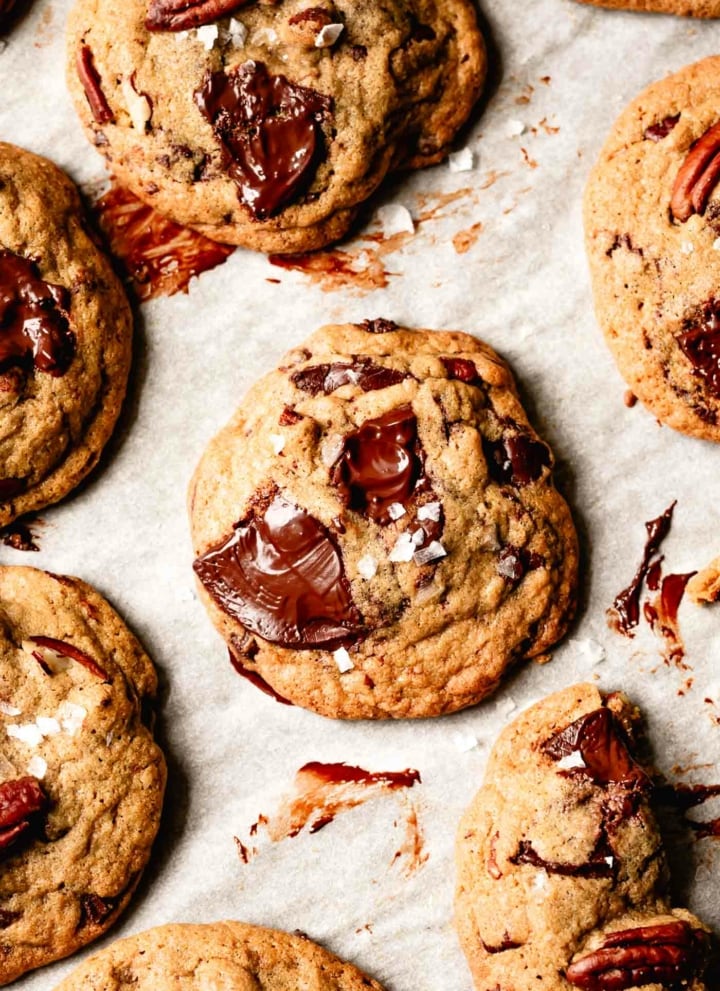
Sandy, buttery cookies become an addictive conversation piece with the addition of ground candy cap mushrooms and flaky sea salt. When dried, candy caps taste like an earthy version of maple syrup, and add delicious flavor to many baked goods.


For the classic candy cap cookies, the dried caps are rehydrated, then chopped finely and added to a soft dough. I wanted to try dispersing the candy cap flavor throughout the cookie, so I ground the shrooms in a coffee grinder, like you would fresh spices. I made a buttery sable dough, tweaked from my favorite Fran Gage recipe (hers are cardamom), and added some chopped, toasted pecans to play up the maple flavor and add a bit of texture. The cookies got rolled into logs, chilled and sliced. A flurry of flaky Malden salt topped the discs and they baked into crumbly, sandy coins of heaven.


Some shortbread cookies call for the addition of cornstarch, rice flour or powdered sugar, as their lack of gluten contributes a desirable sandy quality. I was surprised and pleased to find that the powdered caps had the same effect.


This recipe doubles easily. Extra dough logs store well in the fridge for a week or so, in the freezer for several months. The baked cookies keep for a week or more, stored in an airtight container. Go crazy and serve them with Candy Cap Creme Caramels. Candy caps can be ordered from here.


Salted Pecan and Candy Cap Sables

Makes about 2 dozen 1 1/2 inch cookies

2 teaspoons powdered candy caps (about 1/4 cup, finely ground in coffee grinder)
4 ounces (1/2 cup, 1 stick) unsalted butter, softened but cool
1/3 cup sugar
1/4 teaspoon salt
1 cup all purpose flour
1/3 cup toasted pecans, chopped
flaky sea salt, such as Malden, for topping the cookies

In a stand mixer fitted with the paddle attachment, cream together the candy cap powder, butter, sugar and salt until well combined and slightly lightened, about 2 minutes. (This dough gets creamed less than usual for cookies and cakes; it should be fairly dense and cool to make it easier to shape into logs.) Add the flour and pecans, mix on low until just combined. Fold the dough a few times by hand to make sure it is thoroughly combined.

Roll the dough into a log, about 12" long and 1" in diameter. (For a perfectly round log, roll in a sheet of parchment paper, using a bench scraper or ruler to squeeze the parchment tightly around the dough. See photo, above.) If not using parchment, wrap the log in plastic or wax paper. Chill until firm, 1 hour, or up to several days. (You can also freeze the logs. Thaw in the fridge before proceeding.)

Preheat the oven to 350º. Let the log stand at room temperature for 10 or 15 minutes. Unwrap, and slice the log into 1/4 - 1/2" coins. (Rotate the log every few slices to prevent it from flattening on one side.) Arrange the cookies, one to two inches apart, on baking sheets lined with parchment paper, and sprinkle each coin with several flecks of salt.

Bake the coins until they are nicely golden all over, about 20-30 minutes, rotating once or twice. Underbaked cookies will be bland and pasty, so let these go a bit longer than you think. They will crisp up as they cool.

The cookies store very well in an airtight container for up to a week.

Wednesday, February 3, 2010

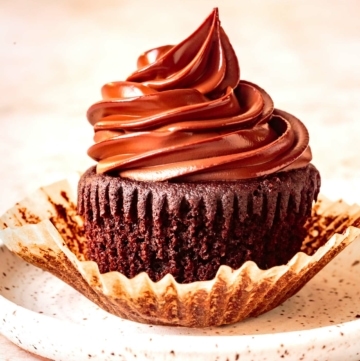
Double Chocolate Banana Cupcakes with Cream Cheese Frosting


'Why don't you weigh five thousand pounds?!' people often ask me when they find out that I bake. (The secret: that IS how much I weigh; I just have really brilliant underwear.)


Just kidding about the underwear (...or AM I?) My secret is simple. I give a lot away - baked goods, of course not underwear (...or DO I?) Being partially bojon, I can't exactly fob off sweets on an office full of bored/gluttonous co-workers. So I bring treats to the people I'm closest to. You're probably thinking I mean my 'friends.' But the sad truth is, most of my friends don't want to be faced with the scores of fat and calories that my art generally contains. And the rapport is too honest for them to politely accept, then chuck the goods surreptitiously in the dumpster on their way home in an act of supreme self-restraint.


They just say no.


So I bring treats to people with whom I have a semi-formal relationship; that perfect space often created by the mutual exchange of goods and services, where said person can be certain I'm not a homicidal sociopath attempting to poison them, but knows that it would be rude and awkward to said relationship to refuse. My dance and yoga teachers. My lovely dentist. My acupuncturist. And I'm working up a little something to bring to my gyno next monday. (Oh dear, that sounded dreadfully wrong.)


Thus I often must consider portability when planning a baking session. Cookies, bars, muffins, scones and tea cakes always pack easily, in baggies, foil or an old yogurt container. Layer cakes, cupcakes, pies and tarts take a bit more finessing, often requiring a bulky box or tupperware which must be held upright lest the icing or filling end up in a state of gooey disarray.


So I wanted to make cupcakes yesterday. Double Chocolate Banana Cupcakes with Cream Cheese Frosting, to be precise. But I also wanted to bring them to my acupuncturist and couldn't wrap my head around how to do it, but I thought, 'Sod it,' (been watching a lot of British comedy lately) 'I'll just make them and see what happens.' And then I did a silly thing: I tried to make cream cheese frosting using Sierra Nevada cream cheese.

Sierra Nevada makes local, organic cheese sans stabilizers, which makes it the best tasting cream cheese this side of the, er, Sierras (or is the Nevadas?) but frosting, not so much. I should have known better. We tried many times at Petite Patisserie and it always ended in tears. Not people tears, but the tears of broken and weeping (not to mention lumpy) frosting.


So I decided to hide it. Not in the trash, or my mouth à la Lucille Ball, or the fridge for Jay to find on a cleaning binge upon which he looks at me wearily and shakes his head. No.


I hid it in the cupcakes.


Shhhh!


I just shoved in the tip of a piping bag, squoze until the cake was on the verge of exploding into a dozen crumbly shards, and capped it with a handy nickle-sized chocolate wafer.


Hopefully the acupuncturist has found the frosting by now, and has stopped wondering why I stingily brought him ugly chocolate muffins. Or perhaps he has fallen victim to the self-denying, chocolate-free, weight obsessed among us, and got rid of them. If so, he will have missed the way the barely sweetened, buttery crumb of the cakes mingles with the salty tang of the frosting, urging forth the subtle, warm flavor of ripe banana and converging into an explosion of homey flavors on the tongue.


Pity.

For the remainder of the cakes, condemned to coalesce with my copious corpulence, I just piped the frosting on top, disguising the lumpish cream with a veneer of cocoa powder, distracting with a jaunty chocolate disc. You get more on, that way - frosting, not corpulence.


Well, that too.

Anyone fancy a cupcake?


Double Chocolate Banana Cupcakes with Cream Cheese Frosting

Adapted from Not Without Salt

Makes 16 - 18 cupcakes

4 ounces (1 stick, 1/2 cup) unsalted butter, at room temperature
3/4 cup packed brown sugar (light or dark)
1 egg
3/4 cup mashed, ripe bananas (about 2 medium)
1/4 cup sour cream
1 teaspoon vanilla extract
1 cup all purpose flour
1/2 cup cocoa powder (I used dutch-processed, but natural should work in a pinch)
1 1/2 teaspoons baking bowder
1/2 teaspoon baking soda
1/2 teaspoon salt
1 cup chopped bittersweet chocolate

Position a rack in the center of the oven and preheat to 350º. Line 18 standard muffin tins with papers.

In the bowl of a stand mixer fitted with the paddle (or by hand) cream together the butter and sugar until light and fluffy, 3-5 minutes on medium. Add the egg and mix until combined, scraping down the sides of the bowl as needed. (The mixture may look broken. That's ok.)

Meanwhile, combine the banana, sour cream and vanilla in a separate bowl or measuring cup. Sift together the flour, cocoa, baking powder, baking soda and salt into a medium bowl.

With the mixer on low, add the dries in three additions alternating with the wets, beginning and ending with the dries, mixing until just combined after each addition. Stir in the chocolate chunks. Give the batter a final fold with a rubber spatula to make sure it's all homogenous.

Divide the batter among the lined cups. (I like to use a spring loaded ice cream scoop, the one with the red handle.) The batter should mound just to the top of the mold.

(Alternately, you can bake this in a 9" round cake pan; adjust the baking time accordingly. Double the frosting for a frosted layer cake.)

Bake the cakes about 15-18 minutes, until the tops spring back when touched. Let cool completely. Top with cream cheese frosting, below, a sprinkle of cocoa and a chunk of chocolate. Or pipe the frosting into the center of the cakes for a more portable option, and stop up the hole with a piece of chocolate.

Store the cakes in the fridge if holding for more than a few hours, but serve at room temperature for the best flavor and texture.

Vanilla-Flecked Cream Cheese Frosting


Makes about 1 1/2 cups

8 ounces cream cheese, at room temperature
4 ounces (1 stick, 1/2 cup) unsalted butter, at room temperature
1/2 vanilla bean, split and scraped (or sub 1/2 teaspoon vanilla extract)
1/2 cup powdered sugar, sifted
big pinch salt

Beat the butter and cream cheese in the bowl of a stand mixer fitted with the paddle until smooth. Add the vanilla seeds, sugar, and salt, and beat until fluffy and light, 2-3 minutes.

Wednesday, January 27, 2010

Plum Cardamom Crumble Squares


I have a bit of a problem. I seem to accrete jars of jam. I can't help it. I don't have compulsive-jam-buying disorder or anything; people gift them to me, homemade-style. I also make jam myself at a rate which far exceeds my jam-eating capabilities (which happens to be rather low). Few activities feel more satisfyingly domestic goddess-ish than lining up a dozen warm jars of freshly canned preserves, listening to the 'shluurrp' as the lids seal themselves down, one by one. Gazing upon their jewel-like colors induces daydreams of 'larders' and 'simpler times' where 'homesteaders' had to 'put things by' in order to last through the 'lean winter.'


But somehow winter never feels quite 'lean' enough to merit eating last year's fruit stewed in copious amounts of sugar and left to sit on the shelf for half a year. Jars that turn out well are swiftly given away in a flurry of 'Look-what-I-made!' excitement, probably to folks like me who fail to eat them, until they turn a dingy grey as revenge for 2 years of neglect.


Jars that turn out less-than-spectacularly end up hanging around our kitchen for years, as well. There was that batch of orange rhubarb marmalade, which tasted great, but the green of the 'barb and orange of the, er, oranges turned an unappetizing shade of brown. Or the time I ordered a case of red plums with the intention of making dozens of jars to give as Christmas gifts, only to bite into one and find it totally flavorless. Oh well, I thought, nothing a little (aka truckload) of sugar can't fix! Only it didn't. Then I let the pot burn slightly. Three years later, I can't seem to admit defeat. Surely someday I'll bake that apple tart that needs glazing, right?


On the other hand, take my talented sister-in-law, Sheila. She's got two kids, a cat, a garden, a successful art career, and she still manages to make the most delectable, sweet-tart, chunky plum jam, which she gifts to her lucky family, stylishly jarred and wrapped, every Christmas. The first time I tasted this jam, two winters ago, I very nearly swooned. I didn't know jam could taste so fresh and bright. We received another jar last winter, but not until this past weekend did I realize how time had flown, jam-free, so quickly, as we brought home yet another to join the fray.


So when Jay started kvetching (another problem) about the abundance of unopened jam jars, I began thinking of ways to use it up. Here's a list that I've come up with:

-jam bars of many varieties
-on toast, scones, crumpets, english muffins
-rugelach
-in plain yogurt
-'jam bag pudding' (which sounds oddly intruiguing)
-thumbprint cookies
-filled doughnuts
-swirled into coffeecake
-to fill muffins or cupcakes
-sandwiched between buttery cookies or macarons
-strained and stirred into buttercream to top cupcakes or fill cookies
-jam crostata
-slathered between layers of cake or a crepe gateau
-baked into gateau basque or pithiviers
-dolloped on pancakes (ricotta!) or folded into crepes (buckwheat!)
-used to glaze fruit tarts, or be the bottom layer of a fruit tart, such as apple
-rolled up in croissant dough, danish dough or puff pastry for turnovers
-to fill blintzes
-folded into whipped cream and rolled into a roulade cake


How do you like to use jam?


I decided to bake jam bars, since there are few things I love more than buttery streusel, and jam bars consist of mostly that, with a layer of Sheila's tart, plum jam to add flavor and textural contrast. (Without the jam, it would basically be sbrisolona, which actually isn't such a bad thing.)

These are stupid easy to prepare: just whizz all the ingredients together in the food processor (excepting the jam), press most of it into a pan, spread the jam over, crumble the rest of the mixture on top, and bake. I based these on a recipe from Williams Sonoma Baking, but swapped the cinnamon for cardamom, which I love with plums, added salt (it called for none, but surely the best part about jam bars is the addictive salty-sweetness?!), changed some other things around, and ended up with a delectable little snack, one fewer jar of jam on the counter, and a quiet boyfriend (for now).


While craving (another) snack this afternoon I opened up this year's jar of Sheila's delectable plum jam and put a scoop into some plain, whole-milk yogurt. The bright, sweet-tart flavor transported me to Corralitos, picking a plum off Jay's mom's tree and biting into its luscious flesh, still warm from the sun. Seriously. This jar won't be getting baked into anything.


Plum Cardamom Crumble Squares

Makes twelve 2" bars

3/4 cup plus 2 tablespoons all purpose flour
3/4 cup old-fashioned rolled oats
1/2 cup brown sugar (light or dark)
1/4 teaspoon salt
1/2 teaspoon ground cardamom
1 stick (4 ounces, 1/2 cup) cold, unsalted butter, diced
1 cup plum (or other slightly tart) jam

Position a rack in the center of the oven and preheat to 350º. Butter an 8" square baking pan, or line it with a sling of parchment paper.

In the bowl of a food processor, combine the flour, oats, sugar, salt and cardamom. Pulse a few times to combine. Scatter the butter over and pulse about 20 times, until the mixture begins to clump together.

Remove 1 cup of the mixture and set aside. Press the remaining mixture firmly into the pan, building up a 1/2 inch lip on all sides. Spread the jam evenly over the bottom, then sprinkle the 1 cup crumb mixture over the top. Pat down lightly.

Bake the bars until golden on top, about 45 minutes. Let cool completely, then cut into 12 bars.

The bars are crispest the day they are baked, but will keep for several days in an airtight container at room temperature.